Georgia’s Hydropower Dilemma
Recent Articles
Author: Ambassador (Ret.) Robert F. Cekuta, Tamta Gegechkori
03/02/2022
I. EXECUTIVE SUMMARY
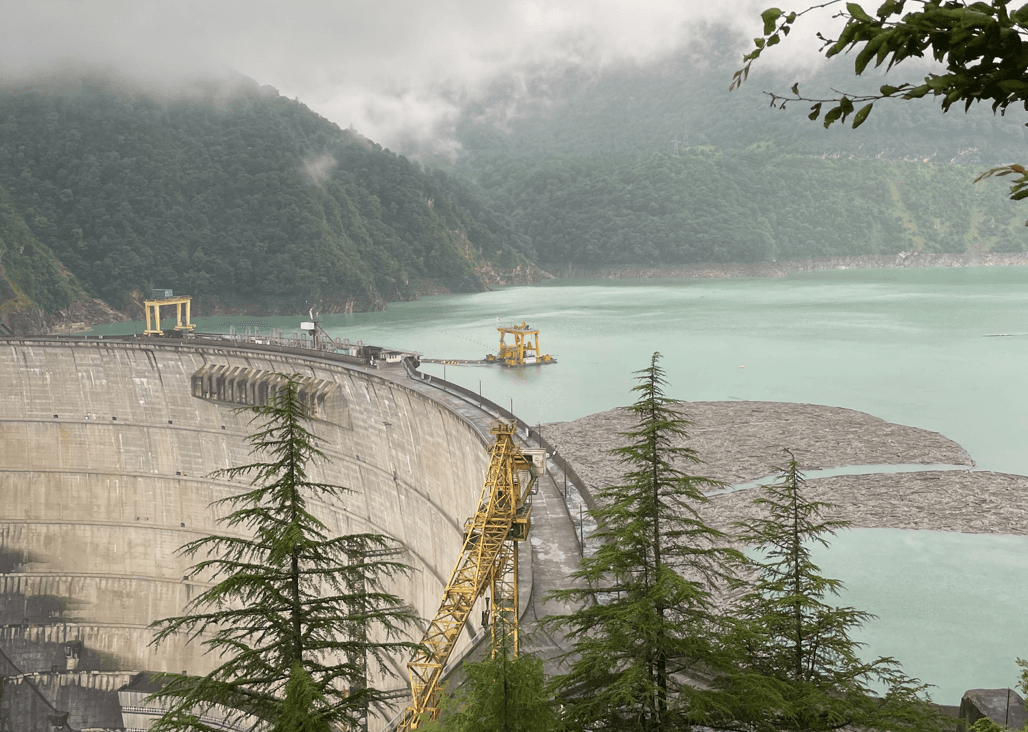
Despite nation-wide protests against proposed large hydropower projects over the past decade, the Government of Georgia remains focused on rapidly developing new installed hydro capacity to address increasing demand for electricity. Georgia’s government seeks to develop self-sufficient electricity production to diversify and mitigate potential risks of dependency on foreign imports, be they from Russia or Azerbaijan. By choosing to focus on large hydropower projects as the primary avenue for this expansion, however, Tbilisi has failed to recognize adequately — and address appropriately — domestic sentiment against these projects, negative feelings that have also fostered distrust towards government entities and foreign investors.
While national authorities bear the bulk of this responsibility, outside actors, including the United States and European governments, private sector investors, and the international financial institutions, can also play helpful roles. Bearing this in mind, the authors propose two sets of recommendations.
To mitigate social and environmental ramifications of large hydropower development and strengthen overall energy security, the Government of Georgia should:
-
- Conduct a comprehensive assessment of Georgia’s national energy security strategy;
-
- Consider diverting resources into run-of-river hydropower and other renewable energy systems as an alternative to large reservoir facilities;
-
- Strengthen Georgia’s national grid to increase its capacity to accommodate greater wind and solar power integration.
The United States is in a position to facilitate Georgian efforts to strengthen energy security and tap its renewable energy potential by:
-
- Encouraging and providing technical assistance to Georgian entities conducting a comprehensive assessment of the country’s national energy security strategy;
-
- Demonstrating and helping build effective communication methods between the central government and local communities; and
-
- Working with Georgia’s government and pertinent Georgian entities to attract renewable energy financing from international financial institutions’ environmental funds.