Central Asia’s Technology Sand Trap: WAICO, Pax Silica and the Choice Between Beijing and Washington
Recent Articles
Author: Dr. Eric Rudenshiold
10/20/2026
A version of this article appeared in the ©25/9/2026 edition of The National Interest
Kazakhstan and Uzbekistan may be forced to choose between the two powers they have spent decades balancing
Since their independence 35 years ago, Kazakhstan and Uzbekistan have spent significant time practicing strategic balancing in their foreign policies. They have sought to counterbalance the interests and demands of their large neighbors, while courting would-be partners elsewhere. In so doing, they have cultivated constructive relationships with the United States, Europe, Turkey, the Gulf states, Japan, South Korea, along with Russia and China. Alienating none, partnering with all to secure trade and connectivity, the strategy has served them well…so far.
Now, however, advances in semiconductors, artificial intelligence, and digital technologies may test whether soft multi-vector balancing can survive. The United States and China are developing competing international frameworks that could result in a partitioning of access to technologies that promise to be drivers of the next generation of economic and geopolitical power.
Washington's Pax Silica initiative features access to trusted supply chains of semiconductors, artificial intelligence, critical minerals, advanced manufacturing, logistics, energy, and digital infrastructure. In order to secure exclusive hardware access and technology sharing, membership in this coalition of like-minded countries may soon come with strict requirements on principles such as data privacy and ethical AI development.
China's World Artificial Intelligence Cooperation Organization (WAICO) sounds on the surface to be a counterproposal but is instead an open-access and inclusive grouping of countries seeking broad international membership. Joining WAICO includes technology sharing, as well as open-source development and assistance for building AI capabilities. For countries seeking to develop and advance their own technological capabilities, both propositions seem attractive. One, however, may be seeking to be mutually exclusive from the other.
Two Sides to Every Choice
Reuters reported in August that the United States was preparing to tell countries that seek to participate in both Pax Silica and WAICO will have to choose between the two. Not fully articulated, the U.S. policy direction views participation in China's technology ecosystem as a security vulnerability to high-end U.S. technological components and represents an incompatible and competing vision for artificial intelligence. This discrepancy creates a particularly difficult challenge for Kazakhstan and Uzbekistan, as both seek to participate in both initiatives.
Kazakhstan joined Pax Silica in June 2026, then signed onto the China-led WAICO framework several weeks later in July. Uzbekistan seeks similarly to belong to both organizations. Consistent with how they traditionally manage international relationships, such instincts are understandable. But this may be a case in which multi-vector diplomacy runs into a hard technological wall.
Pax Silica and WAICO are not the hi-tech embodiments of West and East that can be bridged by skilled actors. The two represent very different approaches to an emerging technological order. Pax Silica extends access to trusted supply chains and reduced dependence on potentially coercive suppliers. The U.S. framework includes an all-encompassing access to semiconductors, connectivity, advanced manufacturing, logistics, and energy. More than just AI access, Astana and Tashkent are attracted to American and allied technology, investment, supply chains and markets.
The WAICO model is different and oriented towards design and development. Its approach emphasizes access to AI, open-source technologies, capacity building, and reducing the technological divide between advanced and developing countries through the roll-out of shared platforms. China's proposal is attractive to developing countries, as it promises access to technology without the political and security conditions requisite to Western techno-systems.
Can’t Have It Both Ways
For Kazakhstan and Uzbekistan, both notions are attractive. Pax Silica can provide access to trusted technology and Western capital while reducing vulnerabilities associated with Chinese-controlled infrastructure. WAICO can provide access to comparatively inexpensive Chinese technology, open-source AI, technical assistance, and a network of developing countries.
The liabilities and overlaps are equally real. A close technological relationship with China will create long-term dependencies tied to equipment and operating systems. A comparable close relationship with the United States in exchange for high-performance computing equipment will impose limitations on the inclusion of Chinese equipment and technology that Central Asian governments have already purchased and mainstreamed into their economies. The issue is not just one of infrastructure, but also of political economy.
The development of the Middle Corridor is a prime case in point. Not just an exercise in improving connectivity of ports, rails and highways, the route is also dependent on adopting data, software, and digital systems to transit freight competitively. The reliance and integration of these disparate components changes the meaning of each individual choice, especially as they relate to one another.
Choices Have Consequences
When a country chooses a cloud platform, telecommunications provider, data system model, AI structure, or digital freight handler, it is not necessarily making a geopolitical decision in that moment. But, collectively, those decisions result in producing an integrated network, with embedded and standardized operating protocols. Systems become interoperable with personnel trained to operate specific technologies. Data aggregates and becomes siloed within these systems. The cost of making changes or switching components becomes enormous.
In effect, joining a technology framework and adopting a specific supply chain can actually result in long-term decisions regarding economic alignment and digital sovereignty. What might initially have seemed as a technical or commercial stand-alone choice can become a Trojan horse for future procurement, interoperability, or any notion of strategic digital autonomy. Kazakhstan in particular has already navigated a number of such decisions.
One past choice and example of how dependencies can develop is what Astana faced at the telecom level with its adoption of 5G systems and whether to rely on Huawei or on European suppliers such as Ericsson and Nokia for critical telecommunications infrastructure. The decision initially may have seemed about which equipment was cheaper versus technically superior. However, once a specific telecommunications vendor’s equipment is adopted and rolled out, replacing it can be prohibitively expensive and disruptive. Not inherently a geopolitical choice when purchased, after thousands of such decisions a resulting digital ecosystem evolves that is difficult to replace.
Kazakhstan's experience with the U.S.-led Blue Dot Network illustrates the challenge. Blue Dot is generally a quality-assurance framework for project financing with high infrastructure standards and project certification. Not an exclusive technology alliance, Blue Dot can coexist with other systems and technologies. Astana expressed interest in joining Blue Dot but never did, while continuing to accept Chinese infrastructure and technology as part of Beijing’s Digital Silk Road (DSR) initiative which offered telecom systems, AI capabilities, cloud computing, e-commerce and other high-tech capabilities. Under Blue Dot, the old multi-vector model was possible; Pax Silica illustrates why it may now be breaking down, presenting a new challenge.
Down in the Chips
Pax Silica, however, presents a potentially different challenge. If Washington limits advanced computing and technology access to participation only behind a firewalled technology system, Astana's existing Chinese equipment and infrastructure could limit the integration of new U.S. technology into existing systems, depending upon Pax Silica’s security, technology, and financing restrictions.
This is a serious, cross-cutting issue that impacts all sectors of a country’s economy. Digital infrastructure increasingly connects and becomes embedded in physical systems that form a common network, with information about cargo, shipping, receivers, and transactions part of the same network. Thus, as a technology provider becomes rooted in Kazakhstan or Uzbekistan’s digital infrastructure, it becomes difficult if not impossible to separate commercial technology from questions of data security and strategic dependence.
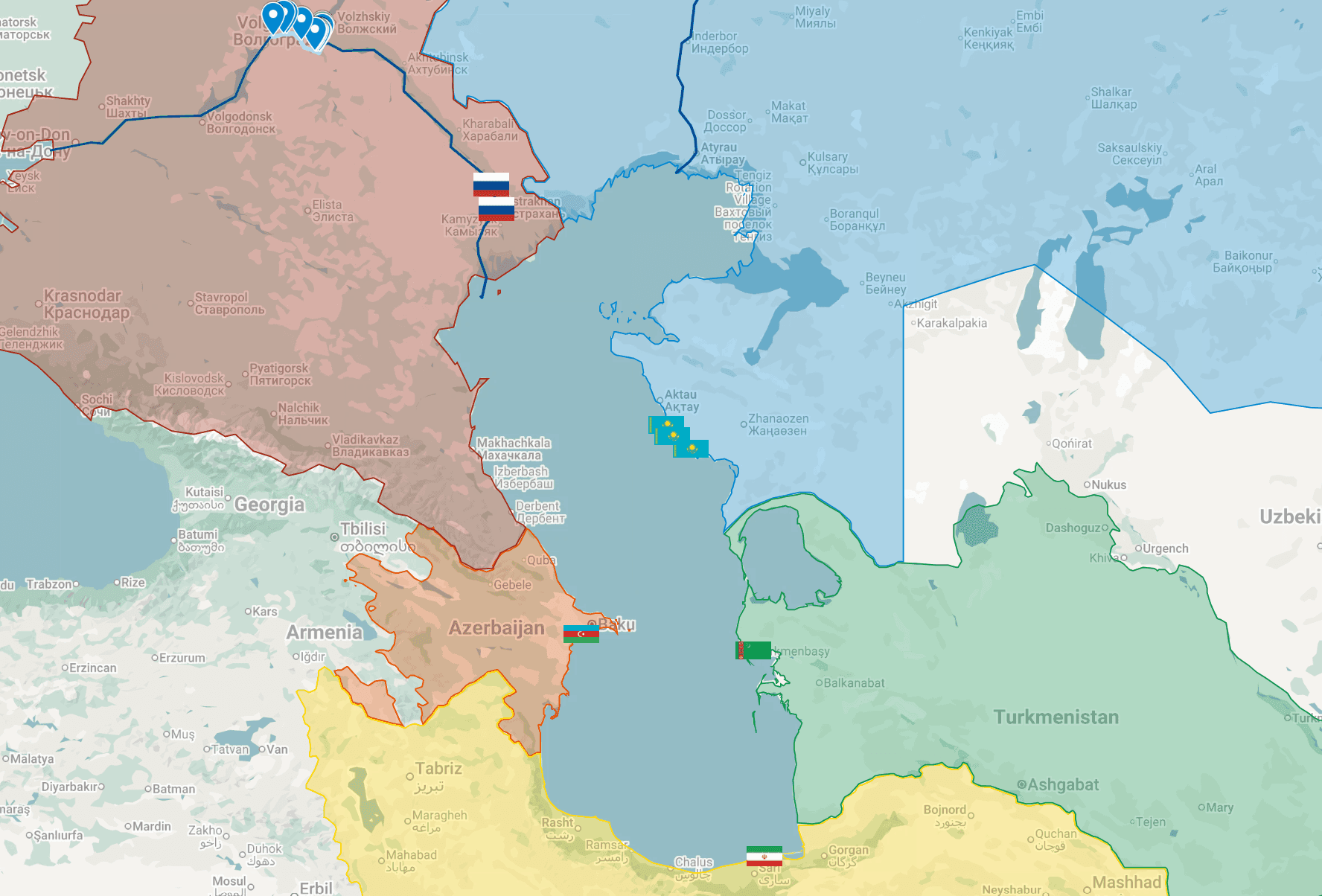
For Central Asia, this problem is especially acute because the region has historically depended on terrestrial digital connections running through Russia and China. That is beginning to change as new sub-sea connectivity is being developed across the Caspian Sea and with the arrival of satellite-based systems such as Starlink. Both offer Central Asian governments alternatives to traditional geographic chokepoints and greater control over how their data moves beyond their borders. These new openings make the choice between technological ecosystems more critical.
You Can’t Always Get What You Want…
Astana and Tashkent are continuing to wade further into difficult waters, signing a number of significant agreements for digital development with China in addition to joining WAICO. One such project is Kazakhstan’s massive Data Center Valley, a one-gigawatt data center complex that envisages creating hyper-scale data centers with Chinese-supplied hardware to develop supercomputing capacity, AI laboratories, and next-generation research institutions.
Alongside Chinese supplier Huawei, U.S. companies Nvidia and Firebird are also $10 billion core participants in the same massive AI complex. Today, Kazakhstan can place Chinese and U.S. technology into the same development, but if Pax Silica imposed hardened ecosystem boundaries, that flexibility would likely disappear.
This juxtaposition of clashing techno-systems is evident across the region’s evolving Middle Corridor. What began as decisions about railways, ports and trade routes linking Central Asia to Azerbaijan, Georgia, Türkiye and Europe, is increasingly about more. The Corridor’s ability to be competitive will depend on digital systems, including customs, cargo tracking, payments, logistics, and potentially AI management of the entire system.
The physical corridor and the digital corridor are merging into one system. Whoever supplies the digital architecture will therefore have influence over more than technology. It will have a role in determining how the region's trade operates. But Washington and Brussels should be careful, as Central Asian governments understand the risks of dependence precisely because they live between Russia and China. Their instinct is to diversify. They want U.S. technology, Chinese investment, European markets, Russian security ties, and connections to the Gulf and Asia.
Sand Trap, Chip Shot
For years, that approach has worked. Kazakhstan and Uzbekistan could join one institution while maintaining relationships with another. They could accept Chinese infrastructure while courting Western investment. Today’s emerging technology challenge is different because technology systems are cumulative.
Membership leads to standards. Standards influence procurement. Procurement guides infrastructure. Infrastructure establishes dependence. This is the root of Washington’s strategic concern over Beijing's technological penetration. Central Asian governments find themselves in a Pax Silica sand trap seeking access to next-generation AI microchips while already committed to Chinese infrastructure. To abandon these latter investments requires Washington to make a compelling case.
If Pax Silica becomes a genuine alternative technological ecosystem, offering competitive financing, reliable technology, investment, and long-term commercial partnerships, then Kazakhstan and Uzbekistan will have strong reasons to pivot. If Washington offers security arguments without appropriate commercial alternatives, the choice becomes more difficult. This is ultimately the test for Pax Silica—and for the Central Asians who have tended to avoid such either-or decisions in the past.
The United States has to offer something better if it expects the Central Asians to reject Chinese technology simply because Washington regards it as strategically risky. Constructing a wall to defend against a digital China risk will require major choices for the Central Asians and incentives from the United States. Competitive access to American and allied technology, financing, investments and partnerships in data centers, telecommunications, and cloud infrastructure. It means helping Central Asian countries develop their own AI expertise rather than simply asking them to buy American, as well as demonstrating that U.S. engagement will continue beyond the next election or administration.
Choosing a Future
The United States needs to understand that Central Asian governments are not looking for a new hegemon but for options. Washington mustn’t interpret the Pax Silica-WAICO confrontation as just another U.S.-China skirmish. So far, the Central Asians are seeking to preserve multi-vectoral flexibility in the midst of competing technological systems. But these systems are becoming less interchangeable as they are deployed.
Central Asia's multi-vectoral strategy was developed in a world in which countries could counter-balance competing partners. If Washington's exclusivity policy becomes formal, Kazakhstan and Uzbekistan may have little choice. But Washington also needs to appreciate what it is asking them to give up, particularly as China is a major and critical trading partner. For Kazakhstan and Uzbekistan, this is not a simple choice between two competing offers, but a decision between technological ecosystems with consequences that will last for decades.
The Huawei-versus-Ericsson/Nokia debate of the past was a warning. Technology choices that appear manageable today can easily become tomorrow’s critical dependencies. Pax Silica, therefore, must be more than a political declaration. If it is to attract countries with Chinese technology already adopted, the United States will need to offer a credible technological and commercial alternative.
The object should not be keeping Kazakhstan and Uzbekistan out of WAICO. Instead, it should be to ensure that they can enter the AI age with digital sovereignty, security, and a genuine choice of partners. For countries whose overriding strategy has been to preserve their freedom to maneuver, that ability to keep that choice may be the most important outcome of all.
Dr. Eric Rudenshiold is the former National Security Adviser for Presidents Trump and Biden. Currently he is the Senior Fellow for Caspian Affairs at the Caspian Policy Center and an adjunct Professor at Georgetown University.